

Binding child support agreement
A binding child support agreement is a legal arrangement between parents that sets out how child support payments will be made. This guide explains what binding child support agreements are, how they work, and what you need to know before entering into one.
What a binding child support agreement means in Australia
A binding child support agreement is a formal arrangement between parents that sets out how child support payments will be made. It's a legally enforceable contract that can be registered with the Department of Social Services, allowing parents to manage child support arrangements outside the standard assessment system.
When a binding child support agreement is created, it documents the financial arrangements for supporting children between separated parents. This agreement typically covers the amount to be paid, the frequency of payments, and how the arrangement will be reviewed over time.
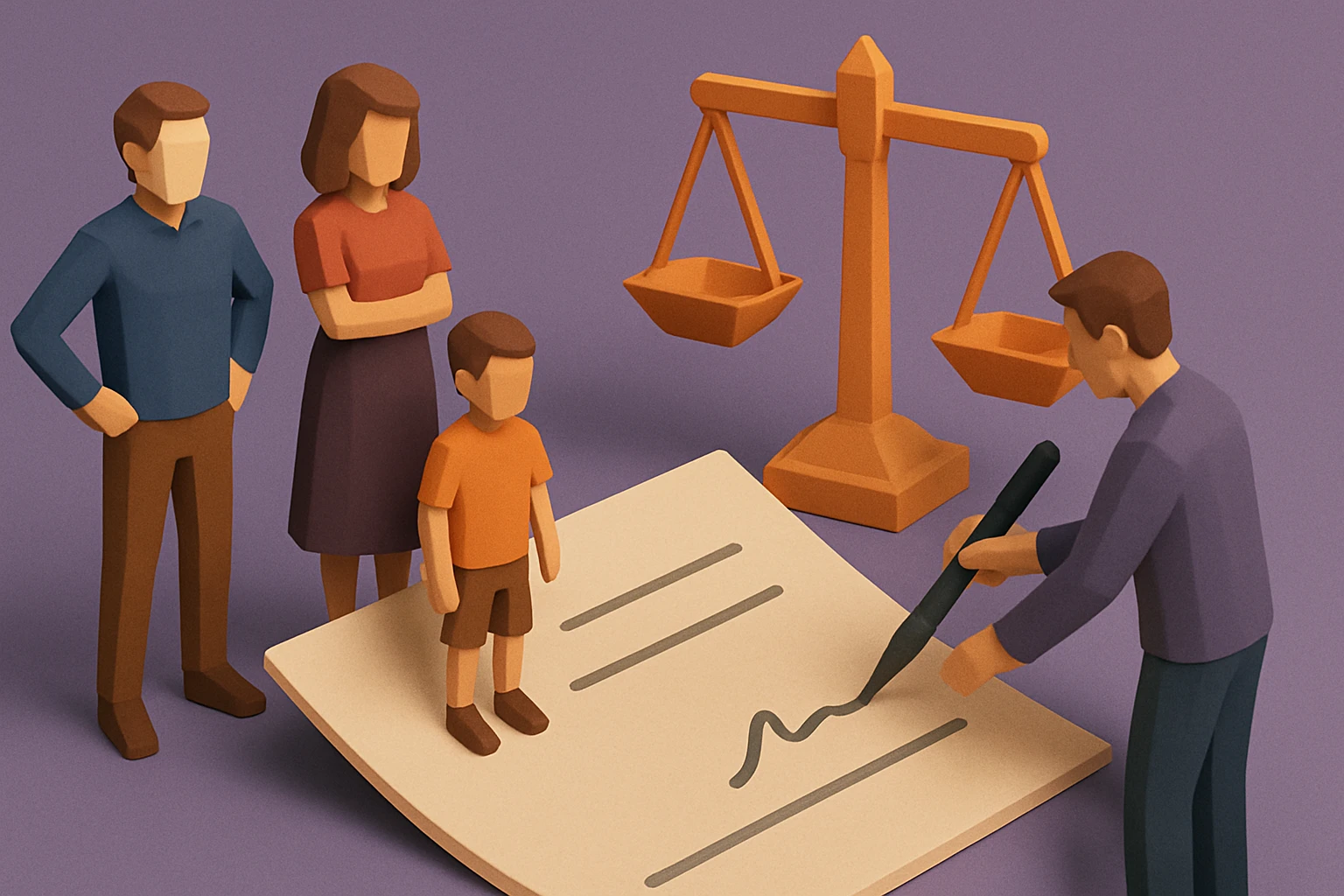
To create a valid binding child support agreement in Australia, both parents must meet specific legal requirements. The agreement must be in writing, signed by both parties, and each parent must receive independent legal advice before signing. This requirement exists to ensure both parents understand their rights and obligations, and that the agreement is fair to both parties. People considering an agreement to enforce child support in this way often look into these requirements.
Some parents prefer this approach because it offers flexibility and control compared to using the standard child support assessment. Once registered, the agreement becomes enforceable through the Department of Social Services, which can take action if payments are missed. However, the agreement can only be changed if both parents agree, or by applying to the court.
Key points
Under the requirements, both parents generally provide written consent and sign the agreement.
Under the requirements, each parent generally receives independent legal advice before signing.
The agreement can be registered with the Department of Social Services
Once binding, the agreement is legally enforceable
Changes require either mutual agreement or court approval
A child support agreement often sets out payment amounts and frequency.
Common situations
You may be considering a binding child support agreement if:
You've separated and want to arrange child support without going through a formal assessment
You want more flexibility in how and when payments are made
You prefer to maintain control over the arrangement rather than have the government set the amount
Your income is variable or you have a non-standard work arrangement
You want to include additional financial commitments beyond basic child support
You're concerned about future disputes and want clarity in writing
You've already agreed informally with the other parent and want to formalise the arrangement
You want to avoid potential child support arrears by documenting clear payment terms
In some cases, poorly drafted agreements or failure to follow the legal requirements can lead to disputes later. For example, if the agreement wasn't signed properly, if legal advice wasn't obtained, or if payment terms become unclear, the arrangement may be challenged. An understanding of what makes an agreement legally binding is something people often find relevant to both parents and the children involved.
What to consider
Have both parents genuinely agreed, or is there pressure from one side?
Can you afford the proposed child support amount?
What happens if circumstances change significantly?
Have you both received independent legal advice requirement from separate lawyers?
Is the agreement clear about how a change of assessment would be handled if needed?
What trigger points might prompt a review of the agreement?
Do you understand the difference between this approach and a standard assessment?
What you can do next and how LawConnect can help
If you're thinking about creating a binding child support agreement, you may wish to:
Have an honest conversation with the other parent about whether an agreement is suitable
Gather information about both parties' income and financial circumstances
Discuss what amount seems fair and sustainable
Understand your legal rights and obligations before agreeing to anything
Seek independent legal advice from a family lawyer
Draft the agreement with legal guidance
People often have both parents sign the document properly.
People often register the agreement with the Department of Social Services.
Once registered, a binding child support agreement becomes enforceable, and the Department can take action to recover unpaid amounts if needed.
How LawConnect can help
Binding child support agreements involve legal and financial decisions that affect both parents and children. Many people need clarity on what they're agreeing to, how to structure the arrangement fairly, and what happens if things change.
LawConnect provides personalised legal information through our AI legal assistant. People can click any of the questions above to receive general information related to their situation. Our AI can help you understand the general legal requirements, what options may be available to you, and what documents or steps typically come next.
However, only a licensed family lawyer can provide legal advice specific to your circumstances, review your proposed agreement, and advise whether it's fair to you. If you'd like professional guidance before or after creating your agreement, we can connect you with licensed family lawyers who specialise in child support arrangements and can provide the tailored legal advice you need.