













Digital assets in a will

Not sure how to protect your assets?
Ask one of these. Get tailored guidance on your digital assets.


Digital assets in a will
Digital assets, such as email accounts, cryptocurrencies, online banking, and social media profiles, form an increasingly important part of many people's estates. This guide explains what digital assets are, why they matter in your will, and how to manage them after your death.
What digital assets in a will means in Australia
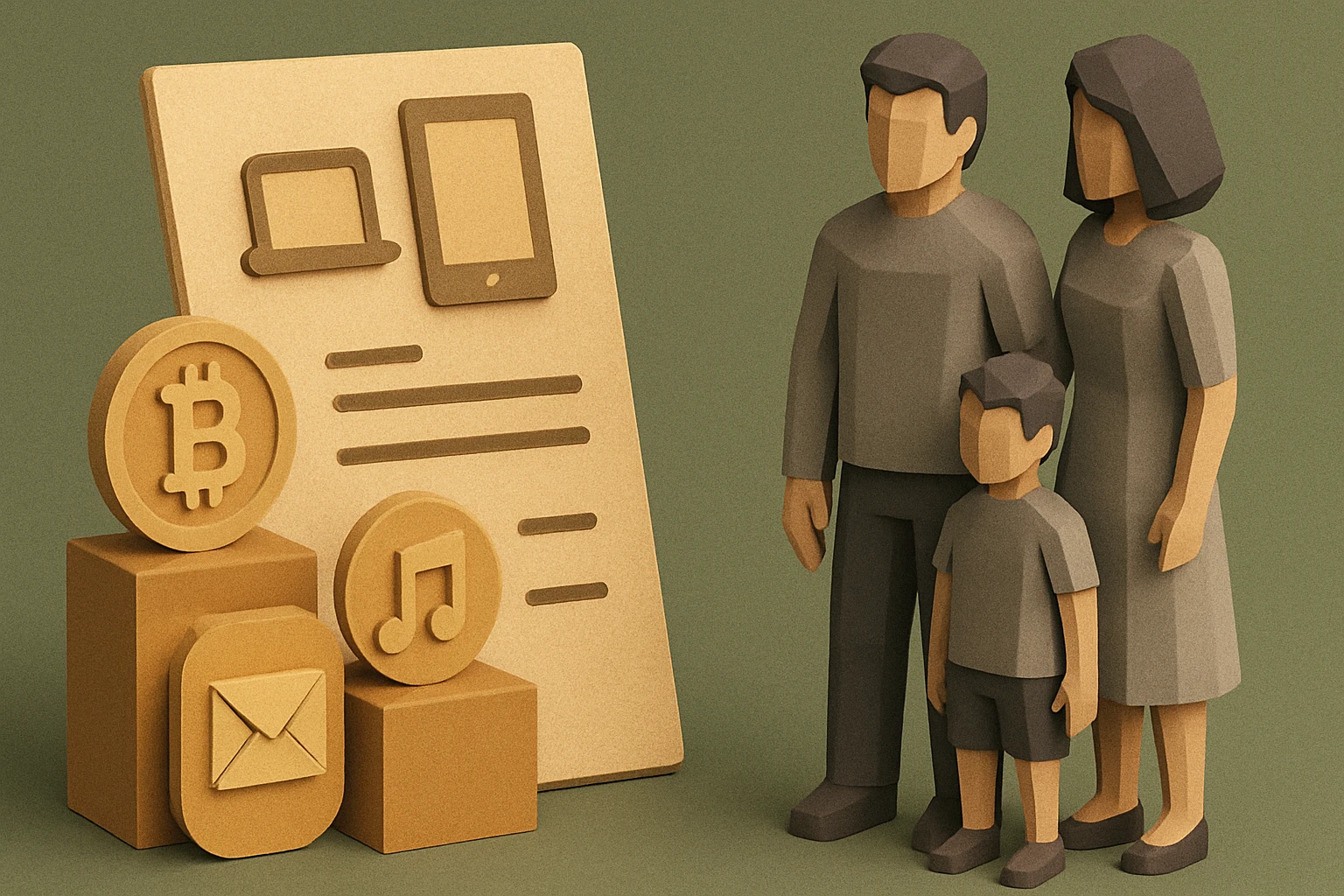
Digital assets have become a frequently discussed part of estate planning. These are online or electronic items of value that you own, such as email accounts, social media profiles, cryptocurrency, online banking access, digital photos, websites, domain names, and subscription services.
When making a will, many people overlook the question of what happens to these online items after they pass away. Unlike physical property, digital assets exist only online and often require specific access details to transfer or close. This is an area people often consider as part of digital estate planning.
In Australia, your will can include instructions for managing your digital assets. This might involve naming a digital executor, a trusted person who can handle your online accounts and information. People can specify what happens to each account, whether that's deletion, memorialisation, or transfer to a family member.
The legal framework for digital assets in Australia is still evolving. However, most states recognise that digital property can form part of your estate. Where clear instructions are not in place, executors may find it harder to access or manage these assets. Some digital platforms have their own policies about account closure after death, which may not align with a person's wishes.
Key points include:
Digital assets can have significant financial value
A will can include specific instructions for managing online accounts
A digital executor is sometimes involved in managing aspects of digital estate planning
Access details and passwords are often stored by people in a secure but accessible manner
Different platforms have different rules about account management after death
Planning ahead is one of a range of matters people sometimes weigh, with outcomes depending on the circumstances
Common situations
You may be thinking about including digital assets in your will if:
You have cryptocurrency or digital investments that hold value
You maintain active social media accounts with personal or family memories
You own a website, blog, or online business
You subscribe to streaming services, software, or digital content
You hold domain names or intellectual property online
You have photos, videos, or digital files stored online that matter to your family
You use online banking or investment platforms
You want to ensure someone can access important digital files after your death
Without clear instructions, several problems can arise. Family members may be unable to access accounts to retrieve important documents or photos. Executors might struggle to understand what digital assets exist or how to manage them. Disputes can occur if multiple people believe they should have access to an account.
What to consider
Have you documented all your digital assets and where they're stored?
Who should act as your digital executor or have access authority?
Do you have a secure way to share passwords and access details with your executor?
Have you checked the terms of service for major accounts to understand what happens after death?
Should some accounts be deleted, transferred, or memorialised?
Are there cryptocurrency wallets or digital investments that need special handling?
Will your executor know about lesser-known or older accounts?
What you can do next and how LawConnect can help
If you're planning to include digital assets in your will, you may wish to:
List all your digital accounts and assets, including their value and location
Identify which digital accounts contain information or assets that matter to your family
Decide whether you want accounts closed, transferred, or memorialised after your death
Choose a trusted person to act as your digital executor
Document your passwords and access details in a secure location separate from your will
Review the terms of service for your major accounts to understand their policies
People sometimes look into whether professional guidance on cryptocurrency inheritance or complex digital assets may be relevant.
People often discuss their wishes with a digital executor so the executor understands what is intended.
How LawConnect can help
Planning for digital assets in a will can feel complex, especially when account terms and technology change regularly. Many people aren't sure what counts as a digital asset or how to give clear instructions in their will.
LawConnect provides personalised legal information through our AI legal assistant. People can ask questions about their situation and receive general information through the AI legal assistant The AI can help you understand your options for digital estate planning and what steps may be relevant to your situation.
However, only a licensed lawyer can provide legal advice specific to your circumstances. If your digital assets are substantial, complex, or if you're uncertain about the best approach, we can connect you with estate planning lawyers who can provide tailored legal advice and help you draft a will that properly addresses your online property.
Some people who plan ahead for digital assets do so in connection with how their online accounts and information may be managed, with outcomes depending on the circumstances
Not sure how to protect your assets?
Ask one of these. Get tailored guidance on your digital assets.

Digital assets in a will FAQs

Online accounts generally don't automatically close when someone passes away. Depending on the platform's terms of service, accounts may remain active, be memorialised, or eventually deleted. Without access information or clear instructions, family members may struggle to manage or close these accounts, potentially leaving personal information exposed or ongoing subscription charges active.
Yes, digital assets can generally be included in a will. This may include online banking accounts, cryptocurrency, email accounts, social media profiles, digital files, and online businesses. However, the practical management of these assets often depends on whether clear instructions and access information are left for an executor, as digital assets work differently from traditional property.
People leave access information in several ways: some include it in a will, store it in a separate secure document referenced in the will, use a password manager an executor can access, or create a separate digital assets inventory Many people use a combination of these methods. People often keep this information updated and stored securely, and let an executor know where to find these instructions.
Digital assets may form part of a person's estate, depending on their nature and whether they have financial or sentimental value. Online bank accounts, cryptocurrency, and digital businesses are generally considered estate assets. However, many social media accounts and email accounts are personal and may not transfer under a will due to platform terms of service. An estate's value and structure will depend on the individual circumstances.