













Domestic violence charges

Not sure what to do next?
Try one of these. Get answers tailored to your situation.


Domestic violence charges
Domestic violence charges in Australia refer to criminal offences that occur in relationships or family settings, including assault, threats, harassment, and property damage. People facing charges or seeking protection often consider what constitutes a domestic violence offence and the legal options that may be available. This guide explains the types of charges, potential consequences, and what to expect through the legal process.
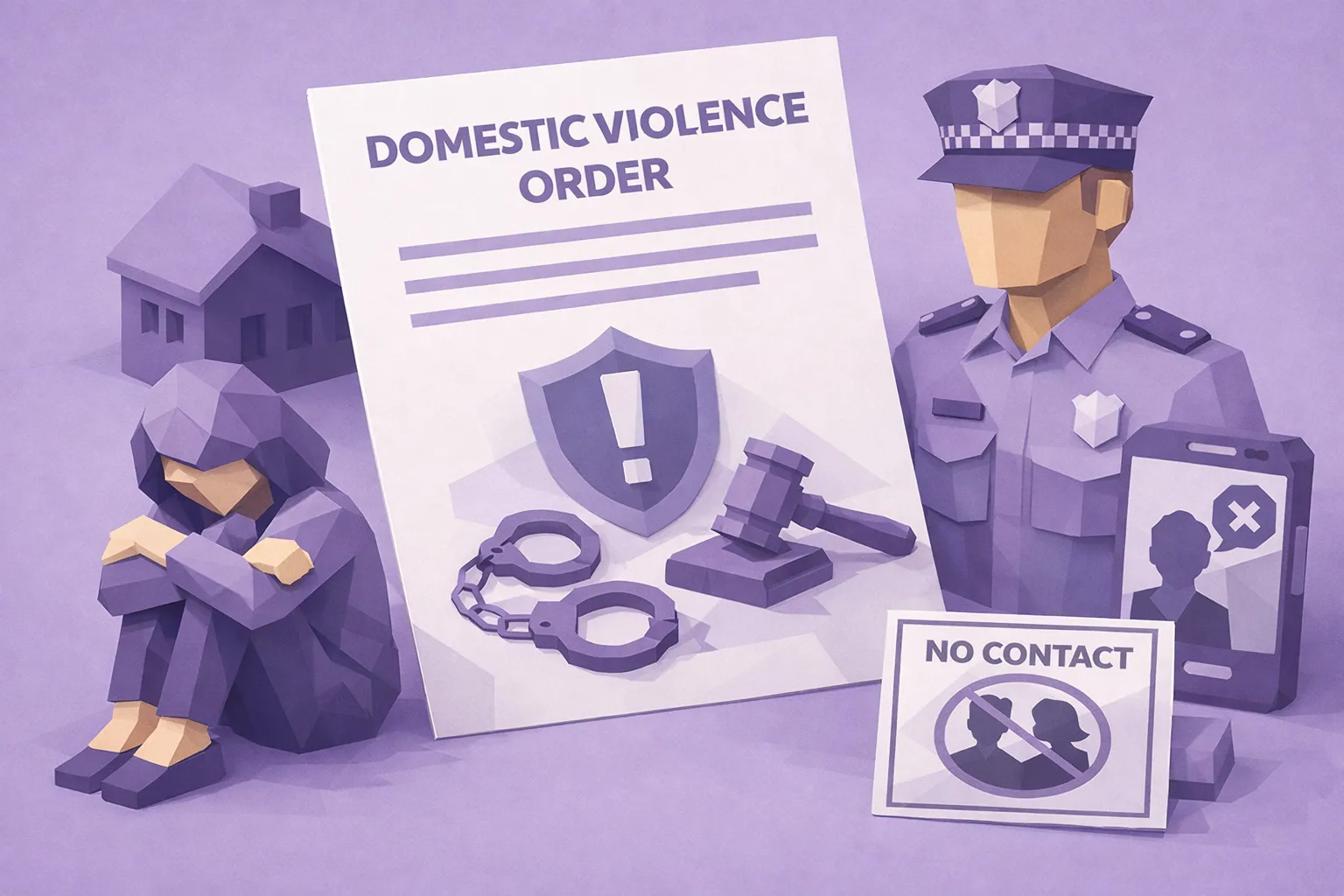
What domestic violence charges mean in Australia
A domestic violence charge refers to criminal allegations arising from a violent or abusive incident within a domestic relationship. These charges are taken seriously under Australian law, with different offences carrying varying penalties depending on the nature and severity of the conduct.
Domestic violence criminal charges can include common assault, aggravated assault, threatening behaviour, or property damage committed by one person against another in a domestic setting. A domestic assault charge typically arises when physical force is used or threatened. The specific offence and resulting dv offence penalty depend on factors such as whether weapons were involved, the extent of injury, prior incidents, and the vulnerability of the victim.
Australian law recognises that domestic violence differs from general criminal conduct because of the power imbalance and ongoing relationship context. Courts consider this when determining sentences and penalties. The aim is to protect vulnerable people and hold offenders accountable.
Key points
A domestic violence charge is a criminal allegation arising from violence or abuse within a domestic relationship
These charges can include assault, threats, property damage, or breaches of protective orders
Penalties vary based on the seriousness of the offence and circumstances involved
Court processes apply to domestic violence criminal charges, just as they do to other criminal matters
Having a charge laid does not automatically result in conviction; the case must be proven in court
An apprehended violence order may be issued alongside criminal charges to provide immediate protection
Common situations
Domestic violence charges may arise in various circumstances:
A partner uses physical force during an argument
One household member threatens or intimidates another
Property is damaged during a conflict between family members
A carer or family member uses excessive force against an elderly or vulnerable person
Breach of an apprehended violence order occurs
A child is exposed to violence between parents or caregivers
Patterns of controlling or coercive behaviour escalate over time
An incident is reported by a third party, such as a neighbour or healthcare provider
A conviction is among the matters that people sometimes find can have effects on a range of areas of life, depending on the circumstances. Even if charges are withdrawn or dismissed, the process itself can be distressing and costly. Errors in details, missed court dates, or misunderstanding of bail conditions are among the matters that people sometimes find affect their circumstances.
What to consider
Have you been arrested or charged?
What are your bail conditions, and do you understand them fully?
Is there an active apprehended violence order against you, or will one be applied for?
Do you have a criminal history?
What evidence exists, and what is your version of events?
Can you afford legal representation, or are you eligible for legal aid?
How much time do you have before your court date?
Are there safety concerns or barriers to compliance with conditions?
What you can do next and how LawConnect can help
People who have been charged with a domestic violence offence often consider a range of steps.
People who have been charged often obtain legal advice from a licensed lawyer.
People often review the bail conditions imposed by police or a court.
People often note information about the circumstances of the incident and any evidence relating to their account.
People often keep a record of any injuries, messages, or other relevant details.
People sometimes consider whether counselling or support services may be relevant to their circumstances.
People generally attend court dates and comply with any orders made.
Where an apprehended violence order is in place, people often familiarise themselves with its exact terms.
People often retain records of any expenses related to legal costs or compliance efforts.
How LawConnect can help
Facing a domestic violence charge is stressful, and many people feel uncertain about their options, rights, and the court process. LawConnect provides personalised legal information through our AI legal assistant, which can help you understand general legal concepts and what may be relevant to your situation.
Our AI can help clarify how the court process typically works, what bail conditions might mean, and what factors courts often consider. However, because every case is unique, only a licensed lawyer can provide legal advice tailored to your specific circumstances.
If you'd like professional guidance, we can connect you with experienced criminal lawyers who specialise in domestic violence matters. Lawyers generally describe their role as reviewing evidence, outlining available options, and providing representation in court where relevant, depending on the circumstances.
How each factor is weighed depends on the circumstances, and a range of matters connected to particular stages of proceedings are among those people sometimes find relevant during this period.
Not sure what to do next?
Try one of these. Get answers tailored to your situation.

Domestic Violence Charges FAQs

If charged with domestic violence, you may be arrested, questioned by police, and either released or detained. You will generally receive formal charge documents and information about your court date. The police may also issue an Apprehended Violence Order (AVO) to protect the other person. People at this early stage often consider their rights and obligations.
Domestic violence penalties depend on the specific offence and circumstances. Common offences include assault, intimidation, or breach of an AVO. Penalties may include fines, community service, or imprisonment. More serious cases can result in longer custodial sentences. The severity often depends on injury caused, prior offences, and other factors specific to your situation.
Yes, if formally charged with domestic violence, you will generally appear in court. You may first appear in a Local Court, and serious matters may proceed to District or Supreme Court. You have the right to legal representation throughout court proceedings. A first court appearance is one stage at which bail conditions or other orders may be set.
A domestic violence charge may affect family law matters including custody and parenting arrangements. Courts consider the safety and wellbeing of children when making orders. A charge does not automatically result in losing custody, but it may influence decisions. Family law and criminal proceedings operate separately, though information from one can be relevant to the other.