











First offence drink driving

Not sure what happens next?
Try one of these smart questions to get clarity on your situation.


Overview of a first drink driving offence
A first drink driving offence occurs when you drive with a blood alcohol concentration (BAC) above the legal limit. People navigating the legal process that follows often look into what happens after a first offence, the possible penalties, and their rights.
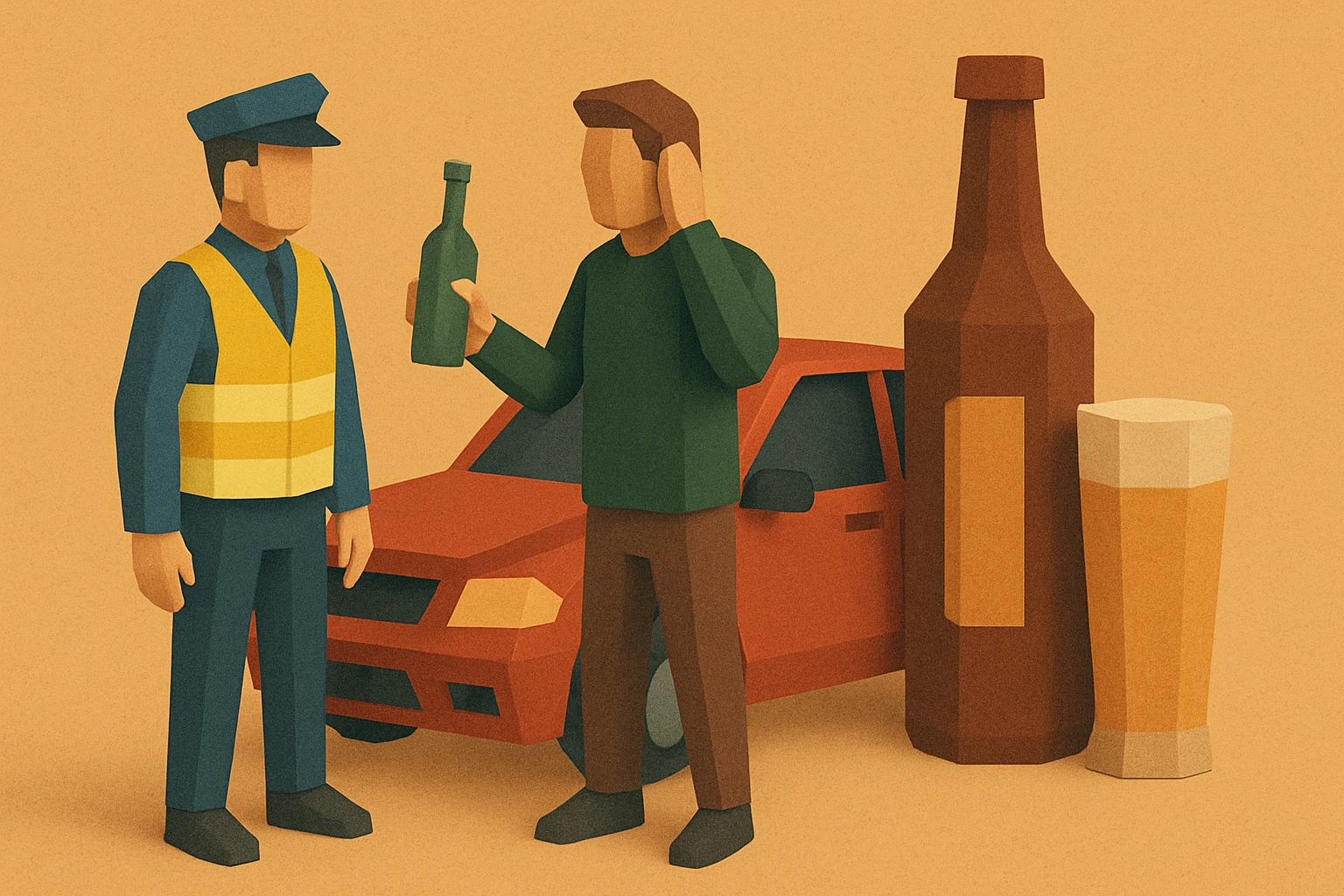
What a first offence drink driving charge means in Australia
A first-time drink driving offence occurs when someone is caught driving with an illegal blood alcohol concentration (BAC) for the first time. In Australia, the legal BAC limit depends on your licence type. For most drivers, the limit is 0.05%. For learner and provisional licence holders, the limit is typically 0.00%.
When you're pulled over and a police officer suspects drink driving, they may ask you to take a breath test or other preliminary test. If the result suggests your BAC exceeds the legal limit, you'll likely be charged. A first PCA (prescribed concentration of alcohol) charge is a matter that may result in penalties, a drink driving criminal record, and licence suspension.
The reason these laws exist is to protect road safety. Alcohol impairs judgment, reaction time, and coordination, increasing the risk of accidents and injuries. Australia's legal framework aims to deter driving under the influence and reduce harm on the roads.
People who receive a first offence drink driving charge often look into the options that may be available to them. You may be eligible for diversion programs or other alternatives in some states, depending on your circumstances and the specifics of your case.
Key points
A first offence drink driving charge is a criminal matter
BAC limits vary by licence type (0.05% for most drivers, 0.00% for learner and provisional licence holders)
Penalties can include fines, court appearance requirements, and loss of driving privileges
A drink driving criminal record can affect employment, travel, and insurance
Some people obtain legal advice at various stages to learn about their rights and options.
Common situations
You may face a first offence drink driving charge in various circumstances, such as:
Being stopped at a random breath test and recording a BAC above the legal limit
Involved in a minor traffic incident and found to have consumed alcohol
Driving home after a social event where you misjudged your alcohol consumption
Pulled over for a separate traffic violation and breath tested as part of the interaction
Failing a preliminary roadside test and then registering a higher reading at the police station
Where the requirements around the breath test procedure, evidence gathering, or police conduct are not properly followed, grounds to challenge a charge may exist in some circumstances. In general, where a charge is not responded to or court dates are missed, a range of consequences may follow, which can include conviction and a drink driving criminal record.
What to consider
People often look into the exact BAC reading recorded and how close it is to the legal limit.
People often look into whether eligibility exists for any diversion program or education course in their state.
People often consider their driving history and current licence type (learner, provisional, or full).
People often consider the potential impact on employment, particularly where driving is part of a role.
People often consider whether to seek legal advice before a first court appearance.
People often consider any defences that may exist based on the testing procedure or police conduct.
People often consider the period connected to particular stages of proceedings for responding to a charge and attending court.
People often find that an awareness of these factors, connected to particular stages of proceedings, assists in making informed decisions.
What you can do next and how LawConnect can help
If you've received a first offence drink driving charge, you may wish to:
Request a copy of the breath test results and police report
Check your eligibility for any diversion program or education course available in your state
People sometimes note dates connected to particular stages of proceedings, including any court appearance.
People sometimes gather information about the circumstances of the test and their licence type.
People sometimes consider whether they want professional legal advice before responding to the charge.
People sometimes note relevant information about their driving history and current circumstances.
People often look into the licence suspension first offence penalties that may apply if a conviction is recorded, including any period of licence suspension.
How LawConnect can help
Facing a first offence drink driving charge can be confusing and stressful. Many people need clarity on their legal options, the court process, potential penalties, and whether defences might apply to their situation.
LawConnect provides personalised legal information through our AI legal assistant. You can ask questions about what happens next, how the court process works, what a criminal record means for your future, or whether diversion programs might be available to you. The AI can help you understand your options and the general risks involved, using information tailored to your circumstances.
If your matter is complex, you have specific defences you want to explore, or you prefer professional legal advice, we can connect you with licensed criminal lawyers in Australia who specialise in drink driving matters. They can provide tailored legal advice, represent you in court if needed, and help protect your rights throughout the process.
Whether you start with general information through the AI or move straight to speaking with a lawyer, LawConnect is here to support you at every stage.
Not sure what happens next?
Try one of these smart questions to get clarity on your situation.

First Offence Drink Driving FAQs

A first drink driving offence in Australia generally results in penalties that may include a fine, a period of licence suspension, and a criminal record. The specific consequences depend on factors like your blood alcohol content, whether you caused harm, and your state or territory's laws. Court proceedings may also apply. We can connect you with a licensed lawyer who can provide legal advice tailored to your situation.
Yes, licence suspension or disqualification typically occurs for a first drink driving offence. The length of suspension varies depending on circumstances such as your blood alcohol level and local laws, generally ranging from several months to over a year. An automatic suspension may also apply immediately after your arrest. Speaking with a licensed lawyer can help clarify what applies to your specific case.
A drink driving conviction generally results in a criminal record that may appear on your official record. This can have ongoing impacts on employment, travel, and professional licensing. In some limited circumstances, courts may have discretion regarding recording convictions, though this depends on specific factors and jurisdiction. A licensed lawyer can advise on the likelihood of a criminal record in your particular situation.
Avoiding a conviction depends on various factors including the circumstances of your case, evidence quality, and the specific charges. Some legal defences or procedural issues may be available, or you may negotiate with prosecutors in certain situations. However, outcomes are not guaranteed and vary case by case. A licensed lawyer can review your circumstances and discuss possible options with you.