













First-time drug offence explained

Not sure what to ask?
Try one of these smart questions tailored to your situation.


First-time drug offence
A first-time drug offence refers to a criminal charge for drug possession, use, or supply when you have no prior drug-related convictions. The consequences depend on factors like the type of drug, the amount involved, and your circumstances. This guide explains what a first-time drug offence is, the potential penalties you may face, and what options may be available to you.
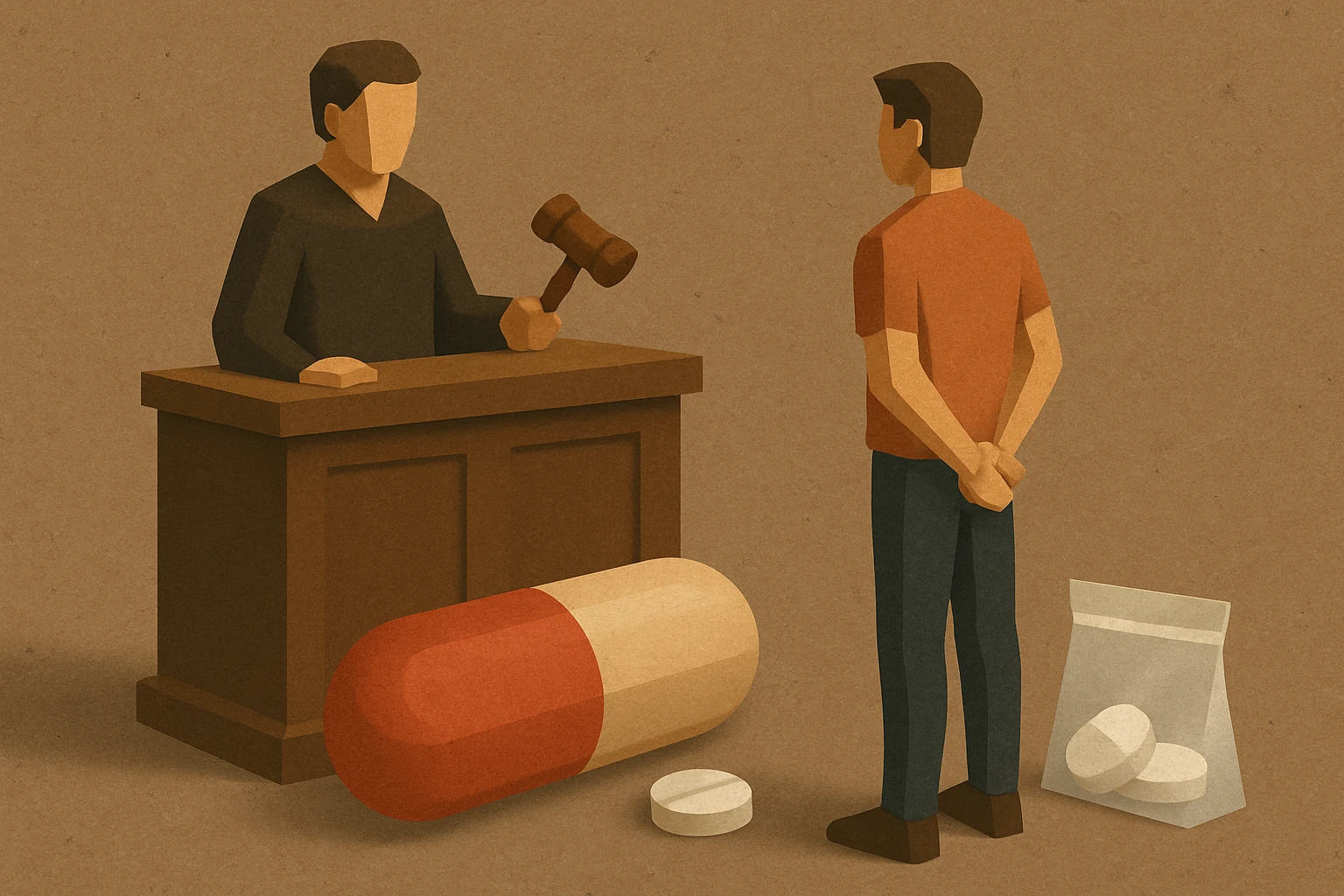
What a first drug offence means in Australia
A first-time drug offence refers to the initial occasion a person is charged with breaking drug-related laws in Australia. This might involve possession of an illegal substance, supply, manufacturing, or trafficking. The nature of the charge depends on the type of drug, the quantity involved, and the circumstances surrounding the incident.
When someone faces a first offence in relation to drugs, Australian law treats it differently from subsequent offences. This distinction can affect potential outcomes, including penalties and sentencing. What constitutes a first-time drug offence and the range of consequences is something people in this situation often consider.
Australian drug laws are largely governed by state and territory legislation, though Commonwealth laws also apply in certain circumstances. The specific offence depends on factors like whether the drug was for personal use or intended for sale. A first offence possession matter may be handled more leniently than a repeat offence or more serious drug dealing case.
Many first-time offenders are unaware of their options to avoid conviction drug offence outcomes. These may include diversion programs, conditional discharges, or other alternatives that don't result in a permanent criminal record. The availability of these options varies depending on the type of drug, the quantity, and the jurisdiction where the offence occurred.
Key points
A first-time drug offence is the initial breach of drug laws, which can include possession, supply, or manufacturing
Drug laws vary between states and territories in Australia
First-time offenders may have different options available compared to repeat offenders
Factors like drug type, quantity, and personal use versus supply affect, how the matter is handled
Legal assistance connected to early stages of proceedings is something people often consider when exploring pathways relating to conviction drug offence outcomes.
Common situations
First-time drug offences arise in a range of circumstances. These common scenarios may relate to a range of situations people encounter.
You may be facing drug-related charges if:
You were found with a small amount of a controlled substance for personal use
You were arrested at a social gathering where drugs were present
You were charged after a traffic stop or police search
You agreed to hold drugs for a friend or family member
You purchased drugs that were intercepted by police
You were involved in growing or manufacturing a drug substance at home
You were charged with distributing or selling a controlled substance
You were found with drugs and paraphernalia at your home or vehicle
The consequences arising from these matters can be serious depending on the circumstances. A conviction may, in some circumstances, result in a permanent criminal record, which is something that can have a range of effects in areas people sometimes consider, such as employment, travel, housing, and professional licensing. Where a court appearance arises, penalties that may apply in some matters can include fines, community service orders, or imprisonment, depending on the offence and drug type.
What to consider
What type and quantity of drug were involved?
Was the substance for personal use or intended for supply?
What was the context of the arrest (location, circumstances)?
Are you eligible for a diversion program in your jurisdiction?
What is the timeline for your first court appearance?
Do you have a clean criminal record prior to this matter?
What legal representation or advice will you need to understand your options?
What you can do next and how LawConnect can help
People facing a first-time drug offence often consider taking action at the stages connected to proceedings. The following are steps people often consider when navigating this situation:
People often seek legal advice at the stages connected to being charged or arrested.
People often gather documentation related to the incident, police statements, and charges.
People often review the sentencing process and what to expect at court.
People often ask about diversion programs or alternatives to prosecution in their state or territory.
People often seek to understand their rights and responsibilities before any court appearance.
People often consider whether representation is needed for court proceedings.
People often explore options relating to conviction drug offence outcomes where they may be eligible.
People often prepare mentally and practically for the next stages in the legal process.
How LawConnect can help
Facing a first drug offence can feel overwhelming, and many people need clarity about their options and what happens next. LawConnect provides personalised legal information through our AI legal assistant. You can ask questions about the sentencing process, diversion programs, what to expect at court, or your rights, and receive guidance tailored to your situation.
Our AI assistant helps you understand general legal information and the range of options that may be available to you. However, it's important to know that only a licensed lawyer can provide legal advice specific to your individual circumstances and case details.
If you decide you need professional advice, we can connect you with a criminal law specialist who can review your matter, explain your options in detail, and represent you in court if needed. Taking action early, whether through our AI information tool or by consulting a lawyer directly, may improve your outcomes in this challenging situation.
Not sure what to ask?
Try one of these smart questions tailored to your situation.

First-time Drug Offence FAQs

Penalties for a first drug offence depend on the type and quantity of drug involved, and your state or territory. You may face a fine, community service, a good behaviour bond, or imprisonment. Courts may take into account a range of matters, and how each factor is weighed depends on the circumstances. People often speak with a lawyer to understand the range of possible outcomes in their situation.
A criminal record may result from a first drug offence if you are convicted. However, the outcome depends on the charge, evidence, and court decision. Some offences may result in diversion programs or non-conviction orders that avoid a permanent record. Each case is different, and people often consider their specific circumstances and options with legal guidance.
There may be options to avoid conviction depending on the circumstances of your case. These could include diversion programs, deferred prosecution, or mental health or drug treatment orders. The availability of these options varies by state and territory. We can connect you with a licensed lawyer who can assess your situation and explain what alternatives may be available to you.