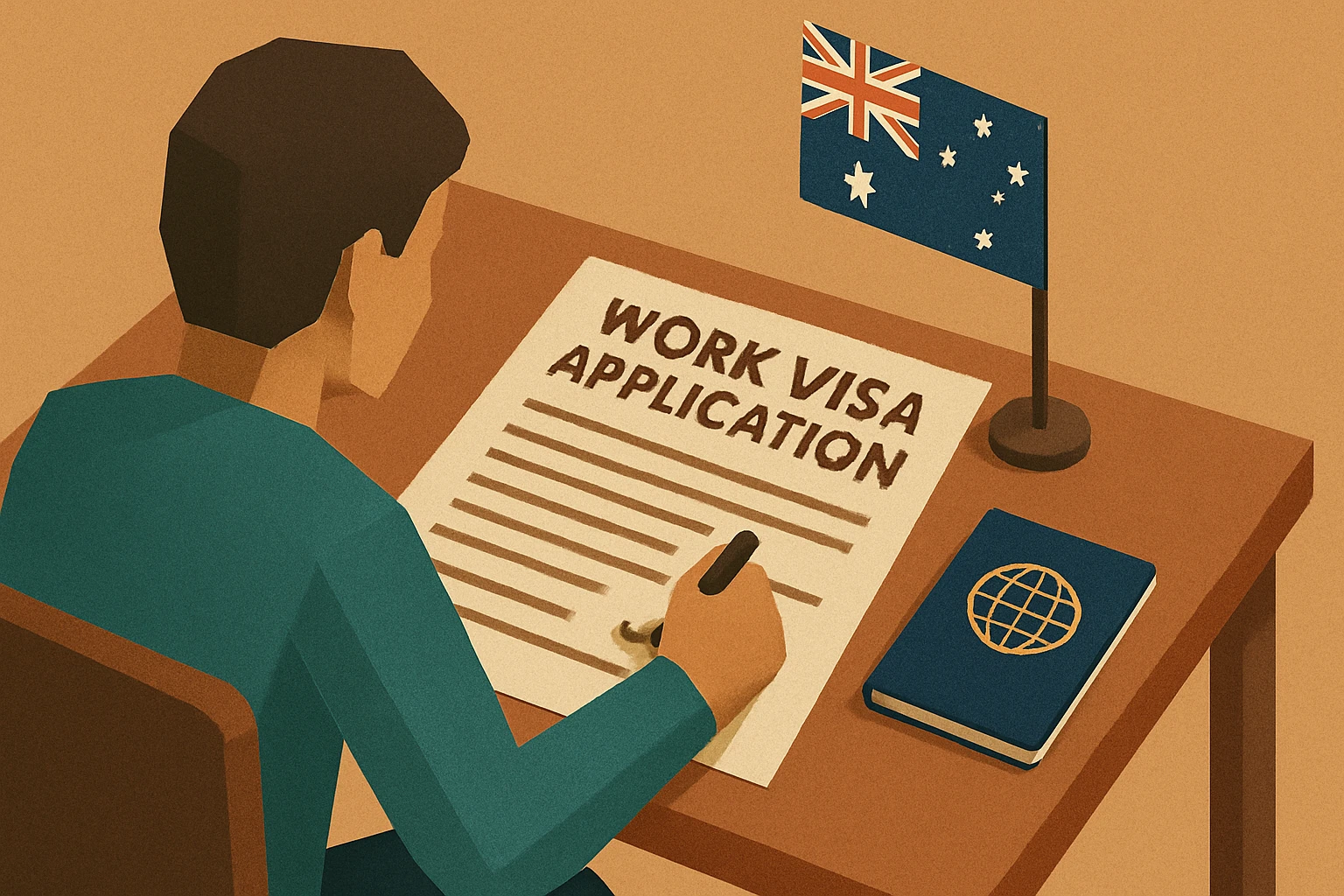


Work visas in Australia explained
A work visa allows you to legally live and work in Australia for a specified period. This guide explains the main types of work visas available, what eligibility requirements generally apply, and matters people often consider when applying.

What a work visa means in Australia
A work visa is an immigration document that allows foreign nationals to live and work in Australia for a specified period. When you obtain a work visa, you gain the legal right to take up employment within Australia, subject to the conditions attached to your visa.
There are several different types of work visas available, each designed for different circumstances and employment situations. Understanding your work visa requirements is something people often look into before they begin working in Australia. These requirements exist to protect both workers and employers, ensure compliance with Australian employment laws, and maintain control over the labour market.
When applying for a temporary work visa, people generally need to meet specific eligibility criteria. This might involve having relevant qualifications, work experience, or a job offer from an Australian employer. Your eligibility depends on the visa subclass you're applying for and your individual circumstances.
Working visa holders in Australia are generally subject to conditions such as restrictions on the type of work you can perform, the employer you can work for, or the duration of employment. Some visas are employer-sponsored, meaning your sponsorship is tied to a specific employer. Others allow more flexibility. People often consider these conditions, as breaching them can affect a person's visa status.
The visa application process involves providing documentation, undergoing health and character assessments, and demonstrating that you meet the requirements. Processing times vary depending on the visa type and your individual circumstances.
Key points
A work visa gives you the legal right to work in Australia for a set period
Different visa types suit different employment situations
Visa conditions may restrict where, how long, or for whom you can work
Health and character requirements apply to most work visas
Breaching visa conditions may be associated with cancellation or future visa refusals in some circumstances.
Common situations
You may be considering a work visa if:
You have a job offer from an Australian employer and need sponsorship
You're a skilled professional seeking to work in Australia temporarily
You're relocating with your family and need to know about dependent visa options
You're considering sponsored work opportunities in regional Australia
You want to understand the visa processing time before your intended start date
A situation that sometimes arises where work visa requirements are not fully understood is that a person may apply for a visa type that does not match their circumstances. In some circumstances this may be associated with visa refusal, application delays, or limitations on working legally while an application is pending. Another situation that sometimes arises involves visa conditions being breached, such as working for an unauthorised employer or exceeding permitted work hours, which may be associated with visa cancellation and future sponsorship difficulties.
What to consider
Do you have a confirmed job offer or employer sponsorship?
Does your qualifications and work experience align with visa requirements?
What are the health and character assessment requirements for your visa type?
How long do you plan to work in Australia, and does your visa duration match this?
Are there state sponsorship options that may be relevant to your situation?
Should you seek professional guidance on the employer sponsored visa process before applying?
What documents will you need to gather for your visa application?
Are there any recent changes to visa policy that may affect your eligibility?
What you can do next and how LawConnect can help
If you're considering working in Australia, you may wish to:
Research the different work visa types to find the one that best matches your circumstances
Check your eligibility against the specific requirements for your chosen visa
Gather necessary documentation including qualifications, work history, and passport details
Arrange health and character assessments as required
Review the skilled visa eligibility criteria if you're pursuing skilled migration
Clarify visa conditions and any restrictions on your employment
People often look into the visa application process and typical processing timeframes.
People often reflect on whether professional support with an application may be relevant.
How LawConnect can help
Navigating work visa requirements and the complexities of working in Australia can feel overwhelming. Many people seek clarity on which visa type suits their situation, which documents may be relevant, and how the visa application process generally works.
LawConnect provides personalised legal information through our AI legal assistant. People can explore the questions above and receive information tailored to their circumstances. Our AI can help you understand the general options available, the typical requirements, and what to expect at each stage.
For tailored legal advice specific to your unique situation, we can connect you with licensed lawyers who specialise in work visas. A migration lawyer generally provides information about available options, and people sometimes seek assistance with the application process.
People often take time to understand the available options and seek appropriate information, and matters such as delays, refusals, and breaches of visa conditions may arise depending on the circumstances.