













How to apply for probate?

Not sure how to start the process?
Ask one of these questions. Get guidance tailored to your situation.


How to apply for probate?
Probate is the legal process of proving a will is valid and obtaining court approval to distribute a deceased person's estate. This guide explains what probate involves, when you may need to apply for it, and the key steps in the application process.
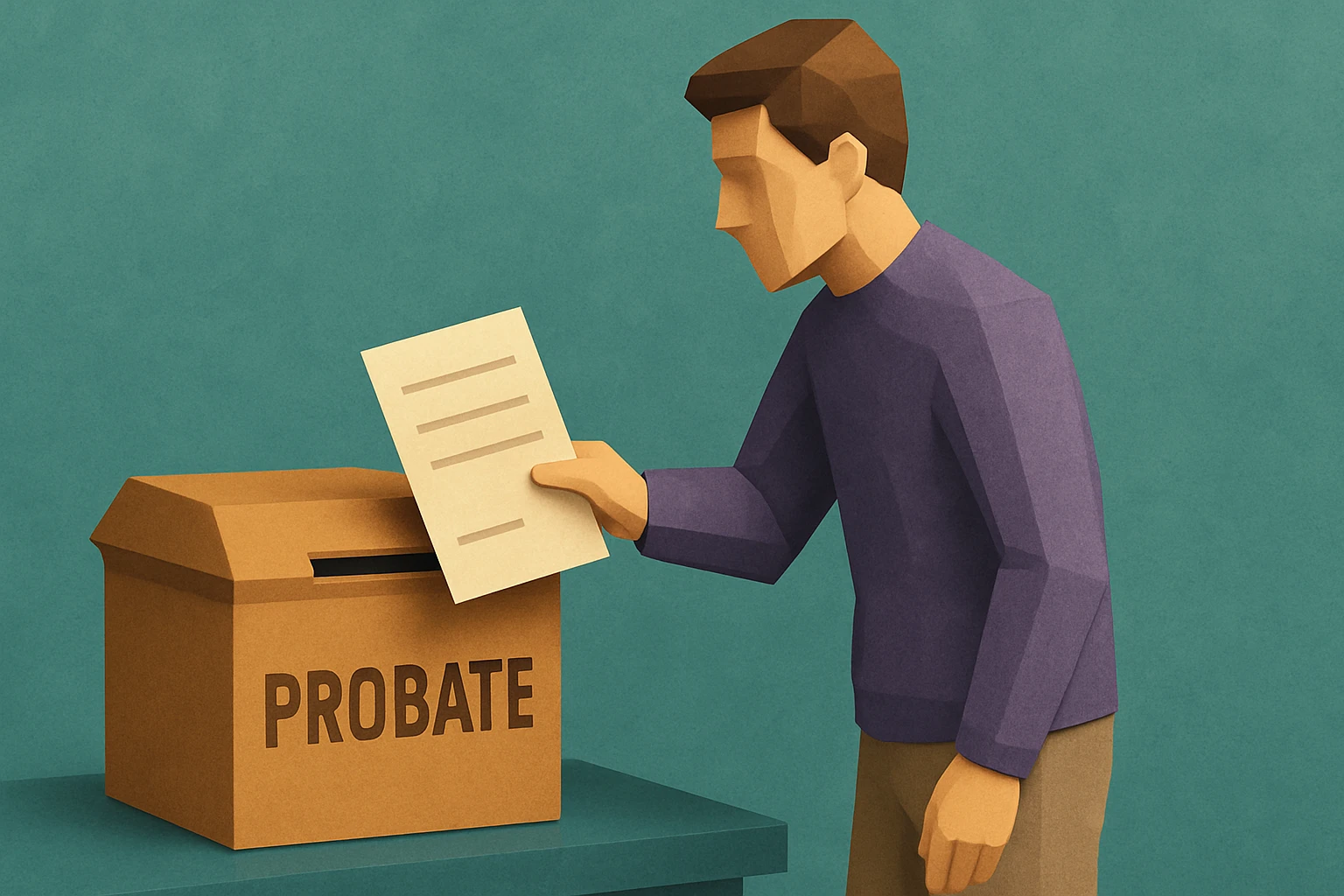
What it means to apply for probate in Australia
Applying for probate is the legal process of obtaining official recognition from a court that a will is valid and that the executor named in the will has the authority to manage the deceased person's estate. When someone dies, their assets often cannot be transferred or accessed without this formal authorisation.
Probate is required in many situations, particularly when the deceased person owned significant property, bank accounts, or investments. The court examines the will to confirm it meets legal requirements and then issues a grant of probate. This document gives the executor the legal power to collect assets, pay debts and taxes, and distribute what remains to the beneficiaries.
The probate application process can be straightforward for simpler estates, but it does involve specific steps and documentation. Some people choose a DIY probate approach, handling the application themselves, while others hire a probate lawyer to guide them through the process. Understanding the requirements early helps avoid delays and potential complications.
Key points
Probate grants an executor legal authority to manage the estate
A probate application must be lodged with the relevant court
The court reviews the will to ensure validity before issuing the grant
Not all estates require probate, depending on asset types and values
Processing times vary between states and the complexity of the estate
Common situations
You may need to apply for probate if:
Significant bank accounts or investment portfolios exist that require formal transfer
The estate includes shares, managed funds, or other securities
Real property needs to be sold or transferred to beneficiaries
There are debts or liabilities that need to be addressed before distribution
Family members or creditors may query the executor's authority
The will names an executor who is not a family member
Assets may be held in different states or territories.
A range of outcomes can arise during the probate process, and how matters proceed depends on the circumstances. If a probate application is rejected or a will's validity is questioned, the matter may need to go to court, and how matters proceed depends on the circumstances. Disputes between beneficiaries can also arise in a range of circumstances, and how matters proceed depends on the circumstances.
What to consider
Has the will been properly stored and is it accessible?
Do you understand the role and responsibilities an executor must take on?
What assets does the estate contain and are their values significant?
Are there known debts, mortgages, or tax obligations?
Could there be family disputes or competing claims?
What will the probate cost, and what fees are involved?
What you can do next and how LawConnect can help
If you need to apply for probate, consider taking these steps:
locating the original will and checking it meets formal requirements
identifying all assets, including property, bank accounts, and investments
obtaining copies of relevant documents (death certificate, asset statements, tax records)
Understand the role of executor responsibilities and whether you can manage them
deciding whether to apply for probate themselves or seek professional guidance
contacting the appropriate court in their state or territory for application forms
Among the steps people often take is completing the probate application form.
Among the steps people often take is gathering supporting documentation.
Among the steps people often take is lodging the application and paying any required fees.
How LawConnect can help
Applying for probate can be overwhelming, especially while managing grief. Many people are unsure where to start or what documents are required. That's where we can help.
LawConnect provides personalised legal information through our AI legal assistant. People can ask questions about the probate application process, learn about the steps generally involved, and explore whether a DIY approach or professional support might suit their situation. Our AI tool helps you understand general legal information and the options that may be available to you.
However, only a licensed lawyer can provide legal advice specific to your individual circumstances. If your estate is complex, involves property disputes, or you'd prefer professional guidance, we can connect you with a probate lawyer who can provide tailored legal advice and support you through the application process.
For many people, approaches to obtaining information vary, and how matters proceed, including delays in settling the estate., depends on the circumstances.
Not sure how to start the process?
Ask one of these questions. Get guidance tailored to your situation.

Probate Application FAQs

To apply for probate in Australia, you generally need to complete an application form and submit it to your state or territory's Supreme Court along with supporting documents. These documents typically include the original will, a death certificate, and details of the deceased person's assets and liabilities. The specific process and requirements vary depending on the state or territory, and people often check the court's website or contact them directly for guidance.
Yes, it is possible to apply for probate yourself without hiring a lawyer. This process is sometimes called 'probate yourself' or doing it as a self-represented person. However, probate applications can be complex, particularly if the estate is large or there are multiple beneficiaries. Some people speak with a licensed lawyer, and lawyers generally explain the process and the matters that may affect timing or accuracy.
The forms required for a probate application depend on your state or territory. Generally, you will need to complete an application form for probate, a supporting affidavit, and potentially other documents such as an inventory of the deceased person's estate. Some courts provide standard forms online. We can connect you with a licensed lawyer who can advise on the specific forms required in your jurisdiction and help you complete them correctly.