












Partner visas in Australia explained

Not sure which visa suits you?
Try one of these. Get information tailored to your situation


Partner visas in Australia explained
A partner visa lets you live in Australia with your spouse, de facto partner, or fiancé. This guide covers the different types of partner visas available, eligibility requirements, and the application process.
What a partner visa means in Australia
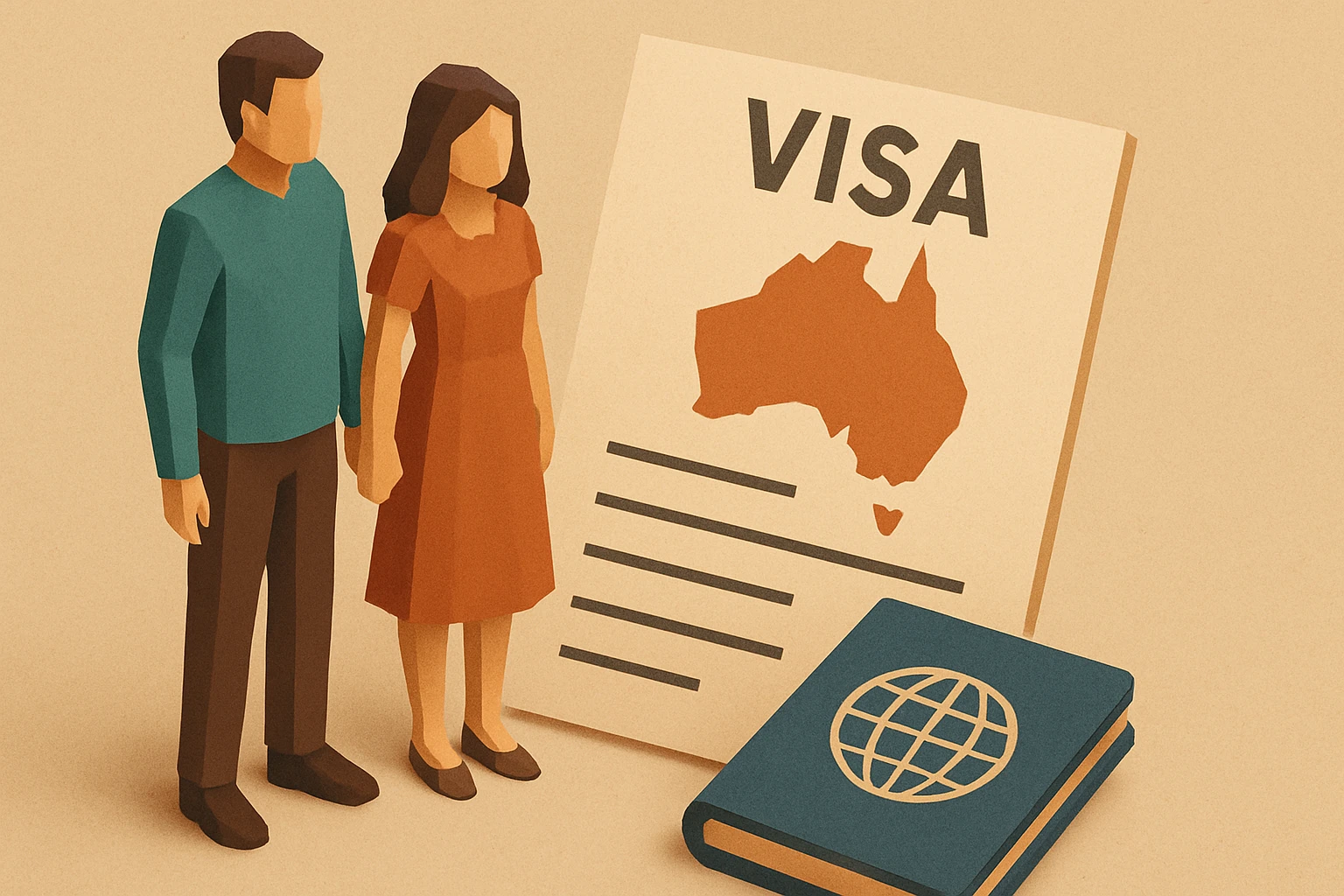
A partner visa is a permanent or temporary visa that allows a person to live, work and study in Australia based on their relationship with an Australian citizen, permanent resident, or eligible New Zealand citizen. This visa category recognises relationships that are genuine and committed, whether married or de facto.
There are several types of partner visas available in Australia, including the spouse visa for married couples, and the de facto visa for couples in committed relationships who are not married. A difference between these visas relates to the nature of the relationship and the supporting documentation generally required.
To obtain a partner visa, a person generally needs to demonstrate that the relationship is genuine and ongoing. This generally involves evidence that people share a life together, have mutual commitment, and intend to continue the relationship. Partner visa requirements vary depending on the visa subclass, but they commonly include proof of identity, health and character assessments, and relationship evidence.
The process involves meeting strict criteria set by the Australian Department of Home Affairs. These requirements exist to ensure the integrity of the migration system and to protect vulnerable people from exploitation. People often take time to become familiar with these requirements as part of the application process.
Key points
Partner visa pathways include both temporary and permanent options
A spouse visa and de facto visa are commonly described as two of the categories.
Genuine relationship proof is generally relevant across all partner visa types.
People may need to meet health, character and financial requirements.
Processing can take several months, and people often factor this timeframe into their planning.
An immigration lawyer can generally provide information about the range of visa options that may be relevant to particular circumstances.
Common situations
You may be considering a partner visa if:
You're married to an Australian citizen or permanent resident and want to live together permanently in Australia
You're in a de facto relationship and want formalised migration status
Your partner is an eligible New Zealand citizen and you want to secure your residency
You're currently on a temporary visa and your relationship with an Australian citizen or permanent resident has developed
You want to bring your partner to Australia and establish permanent residence together
You're in a blended family situation and need clarity on visa options for your partner
What goes wrong
Where partner visa requirements are not fully met, applications may, in general terms, be subject to a range of outcomes that depend on the circumstances. Visa refusal is, in general terms, observed more frequently in cases involving a range of circumstances, which can vary depending on the situation. Such delays can generally affect a person's ability to work, study or remain in Australia, particularly while a bridging visa is in place pending a decision.
How an application proceeds can depend on a range of matters, and the outcome varies depending on the circumstances. How applications progress can depend on a range of matters, and outcomes vary depending on the circumstances.
What to consider
What type of partner visa suits your relationship status and circumstances?
Do you have adequate genuine relationship proof, such as shared finances, joint property, or statements from friends and family?
What is the current processing time for your visa type?
Have you and your partner discussed financial responsibilities and living arrangements?
Do you understand the health and character requirements, and are there any potential issues?
Would professional guidance from an immigration lawyer help clarify your options?
Are you aware of your rights and obligations once you obtain a partner visa?
How long are you willing to wait, and do you need interim visa arrangements?
What you can do next and how LawConnect can help
If you're considering a partner visa, you may wish to:
People often gather evidence of a genuine and ongoing relationship, such as joint bank statements, shared tenancy agreements, photos, and correspondence.
People often review the specific partner visa requirements for a visa subclass to become familiar with what may need to be prepared.
People often organise health and character documentation at an early stage of the process.
People often discuss financial arrangements with their partner, including sponsorship responsibilities.
People often look into partner visa processing time estimates as part of their planning.
People often consider whether interim arrangements, such as a bridging visa, may be relevant while an application is being assessed.
People often consider whether to apply independently or to seek professional guidance.
How LawConnect can help
Navigating partner visa requirements can be complex, and many people feel uncertain about a range of matters relating to evidence and visa options, which depend on the circumstances. LawConnect provides personalised legal information through our AI legal assistant, which can help you understand the general requirements and explore the range of options that may be available to you.
Our AI tool is designed to help you build clarity around partner visa applications, genuine relationship proof, and common procedural steps. It can answer general questions about visa types, timelines, and what documents you might need.
However, only a licensed immigration lawyer can provide legal advice tailored to your specific circumstances, assess the strength of your application, or represent you during the process. If you decide you need professional support, LawConnect can connect you with an immigration lawyer who can review your situation in detail and guide you through the application process.
Becoming familiar with the available options is something people often do when approaching a partner visa application.
Not sure which visa suits you?
Try one of these. Get information tailored to your situation

Partner Visa FAQs

A partner visa is an Australian immigration visa that allows people to live, work, and study in Australia based on their relationship with an Australian citizen, permanent resident, or eligible New Zealand citizen. There are several types of partner visas available, including temporary visas and permanent residence visas. The specific visa a person can apply for depends on their circumstances and relationship status.
A partner visa generally involves two stages, which include the sponsoring partner being assessed and approved as a sponsor, and the application being assessed to determine whether the visa requirements are met. Applicants generally must demonstrate a genuine and continuing relationship with their sponsor. The process can take several months to complete and involves documentation, interviews, and health and character checks.
Whether a person can apply for a partner visa depends on several factors, including relationship status, the partner's eligibility to sponsor, and whether character and health requirements are met. Generally, an applicant must be in a genuine relationship with an eligible sponsor. Individual eligibility depends on the circumstances, and people often consult a licensed migration lawyer who can assess their situation.