











Partner visa requirements in Australia

Not sure what visa applies?
Try one of these. Get answers tailored to your situation.


Partner visa requirements in Australia
A partner visa allows you to move to and live in Australia with your spouse or de facto partner. This guide explains the main visa options available, the eligibility requirements you'll need to meet, and the key steps involved in the application process.
What partner visa eligibility means in Australia
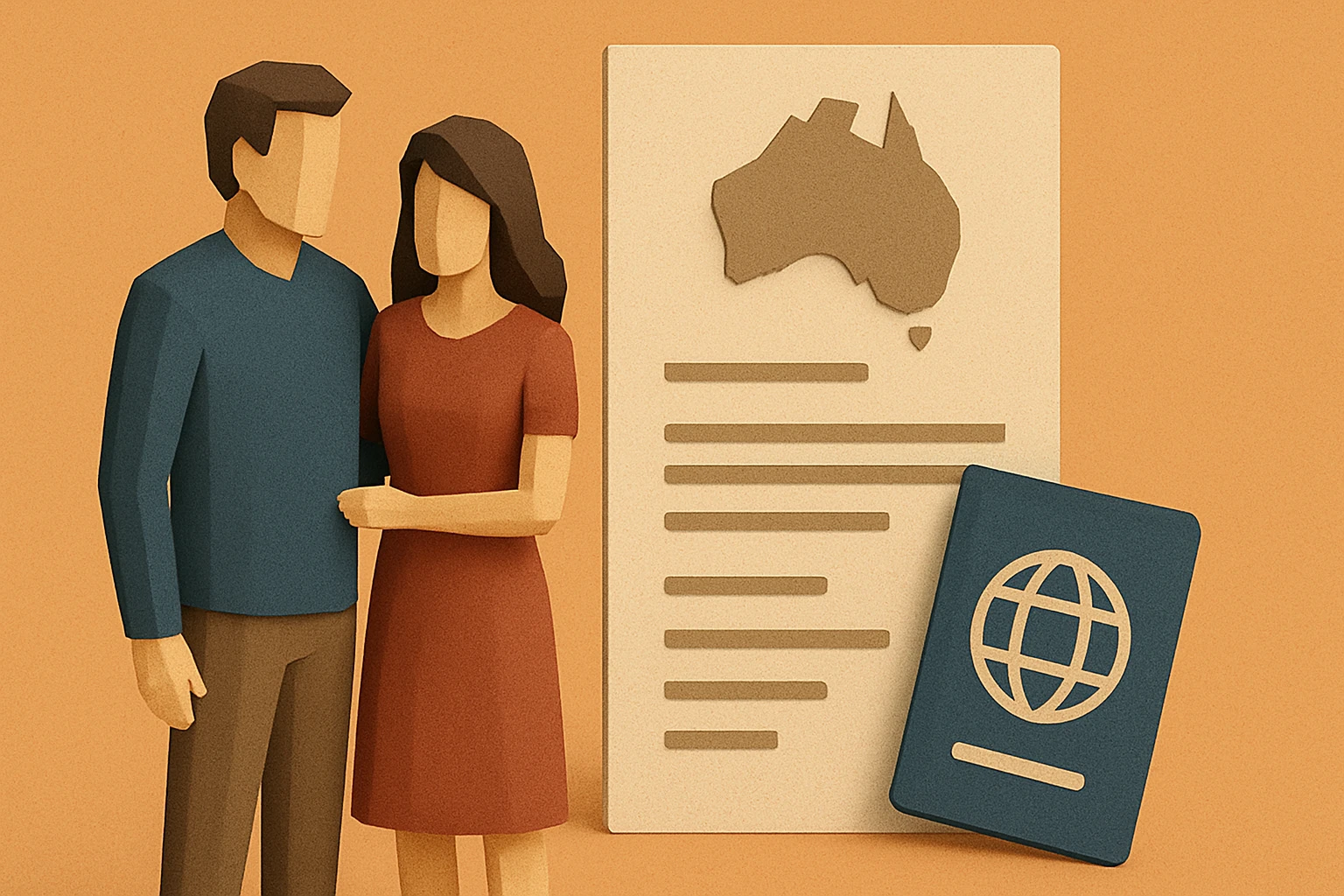
A partner visa allows you to live, work, and study in Australia as the spouse or de facto partner of an Australian citizen, permanent resident, or eligible New Zealand citizen. The Australian immigration system recognises both married couples and de facto relationships, regardless of whether they are same-sex or opposite-sex partnerships.
To apply for a partner visa, you must meet certain legal criteria set by the Department of Home Affairs. The process involves demonstrating that your relationship is genuine and ongoing, and that you meet specific eligibility requirements. Partner visa requirements are designed to prevent fraudulent applications while supporting genuine relationships.
The visa itself does not guarantee settlement. After a period of time, you may be eligible to apply for permanent residency, though this depends on how you satisfy the conditions of your visa and your broader circumstances.
There are several pathways for partner visas, including offshore visas (applied for outside Australia) and onshore visas (applied for while in Australia). Your choice may depend on where you currently live and your immigration status.
Key points
Partner visas recognise both married and de facto relationships
Partner visa documents must clearly establish your relationship history and future intentions
Different visa types have different eligibility criteria
The application process involves assessment by immigration officials
Meeting relationship evidence standards is essential to a successful application
Common situations
You may be considering a partner visa if:
You are married to an Australian citizen or permanent resident
You are in a de facto relationship with an Australian resident
You want to move to Australia permanently with your partner
Your partner has sponsored you for migration purposes
You are currently on a temporary visa and want to transition to partner visa eligibility
You want to apply for a bridging visa while your main application is being processed
Your relationship is long-distance and you want to establish permanent residence together
You have children with your Australian partner and want family unity
If your application is unsuccessful or involves errors, delays can be significant. For example, if relationship evidence is insufficient or not properly documented, the department may request further information, which extends the processing timeline. In some cases, a partner visa refusal can occur if officials determine the relationship does not meet the genuine and ongoing standard.
What to consider
Have you gathered all necessary documents to support your application?
Does your relationship meet the legal definition of de facto or marriage under Australian law?
How long have you been in a relationship, and can you demonstrate its continuity?
What visa processing time should you anticipate for your particular circumstances?
Are there any gaps in your relationship evidence that need to be addressed?
Would consulting an immigration lawyer help clarify your pathway and reduce risk of refusal?
Have you considered whether a temporary visa option might suit your situation in the interim?
What you can do next and how LawConnect can help
If you are thinking about applying for a partner visa, you may wish to:
Gather documents that demonstrate your relationship
Review the official Department of Home Affairs criteria to understand what counts as genuine and ongoing
Prepare a detailed statement about your relationship history and future plans
Consider whether you are currently eligible to apply, or if you need to adjust your visa status first
Research the differences between onshore and offshore applications to determine which suits you
Decide whether professional guidance would help reduce the risk of errors or omissions
How LawConnect can help
Applying for a partner visa involves navigating complex eligibility rules and gathering the right relationship evidence. Many people find it helpful to clarify what documents are needed, how to present their relationship convincingly, and what timelines to expect.
LawConnect provides personalised legal information through our AI legal assistant. You can start by asking questions about partner visa documents, relationship evidence standards, or the general application pathway. Our AI tool helps you understand the landscape and explore your options, rather than providing specific legal advice.
If your situation is complex, or if you want tailored advice about your particular circumstances, we can connect you with a licensed immigration lawyer. An immigration lawyer can review your specific case, advise on strategy, and help you avoid costly mistakes. They can also represent you throughout the process if needed.
Taking time now to understand the requirements and gather strong documentation may help reduce delays and the risk of a partner visa refusal.
Not sure what visa applies?
Try one of these. Get answers tailored to your situation.

Partner Visa Requirements FAQs

Partner visa requirements generally include proving a genuine and continuing relationship with an Australian citizen, permanent resident, or eligible visa holder. You must meet health and character requirements, and demonstrate financial capacity to support yourself. The specific requirements depend on the visa subclass you apply for, such as temporary or permanent partner visas. We can connect you with a licensed lawyer who can assess your individual circumstances.
You typically need documentation showing your relationship, identity, passport details, and health and character assessments. Financial evidence, accommodation details, and statements from witnesses who know your relationship are often required. The exact documents depend on your visa type and personal circumstances. A licensed lawyer can guide you on the specific documents needed for your application.
Common proof includes marriage certificates, birth certificates of shared children, joint bank accounts, shared tenancy agreements, and statutory declarations from people who know your relationship. Communication records, photos, and travel documents together may also support your application. Immigration authorities assess each application individually, so evidence requirements may vary. Speaking with a licensed lawyer can help you prepare the strongest possible documentation.