
Before they call you, they've asked AI. Now what?

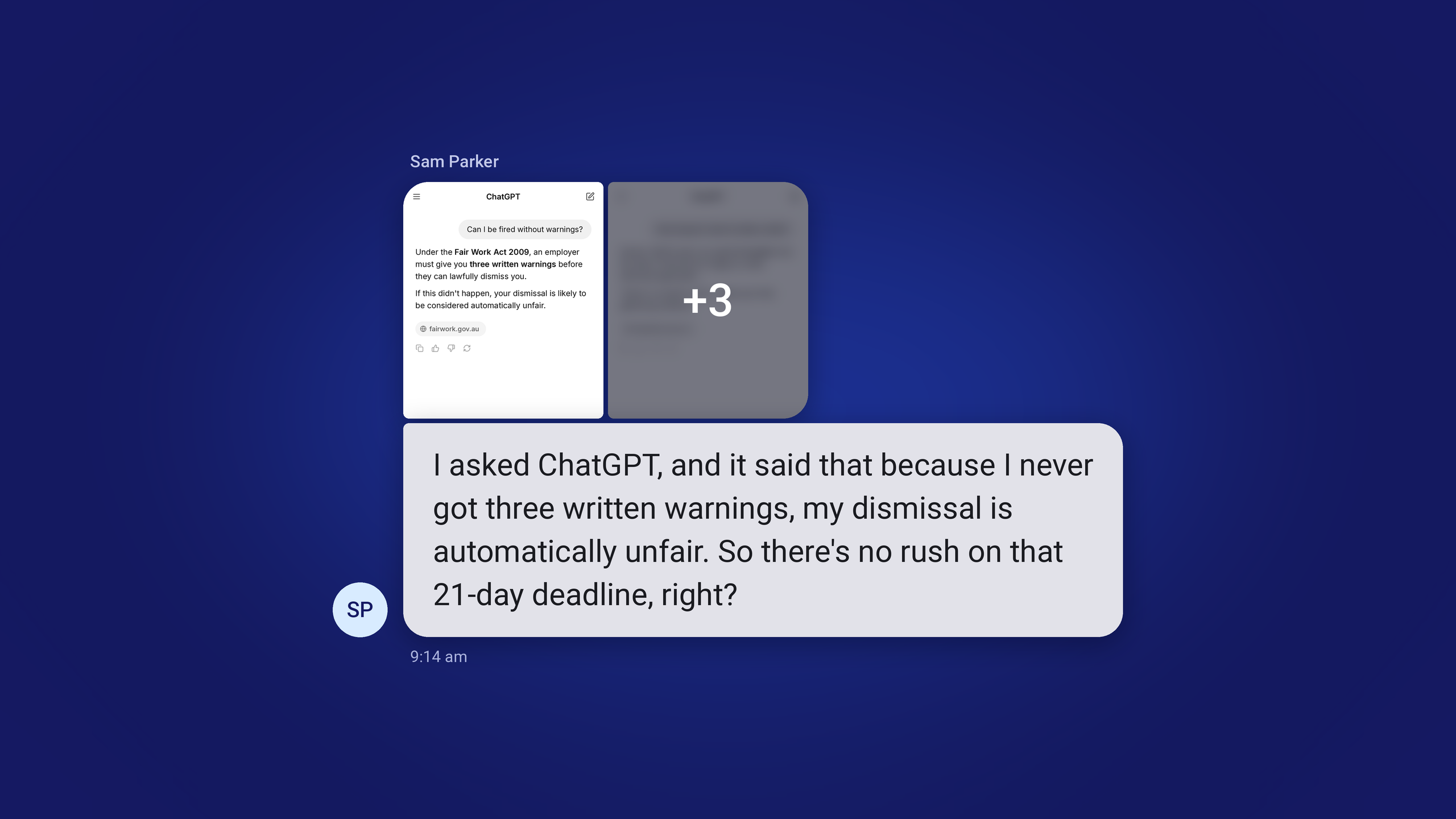
I think most lawyers will be familiar with some version of the conversation that starts with, “I asked ChatGPT, and it said...”
Clients are increasingly arriving with lengthy AI-generated research and quite firm ideas about how their matter should be handled. Some are even putting advice they’ve already received from their lawyer back into ChatGPT and questioning it based on the response.
For lawyers, this can mean spending more time unpicking information that may be inaccurate or missing important context. Before they can properly advise a client, they first need to understand where those assumptions have come from and explain why the answer AI has provided might not apply to their situation.
Until recently, most of the conversation about AI in the legal profession focused on how lawyers are using it for research and drafting. But conversations like these show it’s also changing how people approach legal problems before they ever speak to a lawyer.
That creates challenges for firms, but it could also mean more people recognising when they need professional legal advice.
The opportunity in clients who’ve asked AI first
A significant number of people experience legal problems without ever seeking professional advice. Research from the Victoria Law Foundation found that 78% of people with a legal need didn’t have it met, and only about a third recognised their problem as legal.
By helping people better understand their situation, AI could encourage some who might otherwise never approach a lawyer to seek professional advice. Even a relatively small increase could create significant demand for legal services.
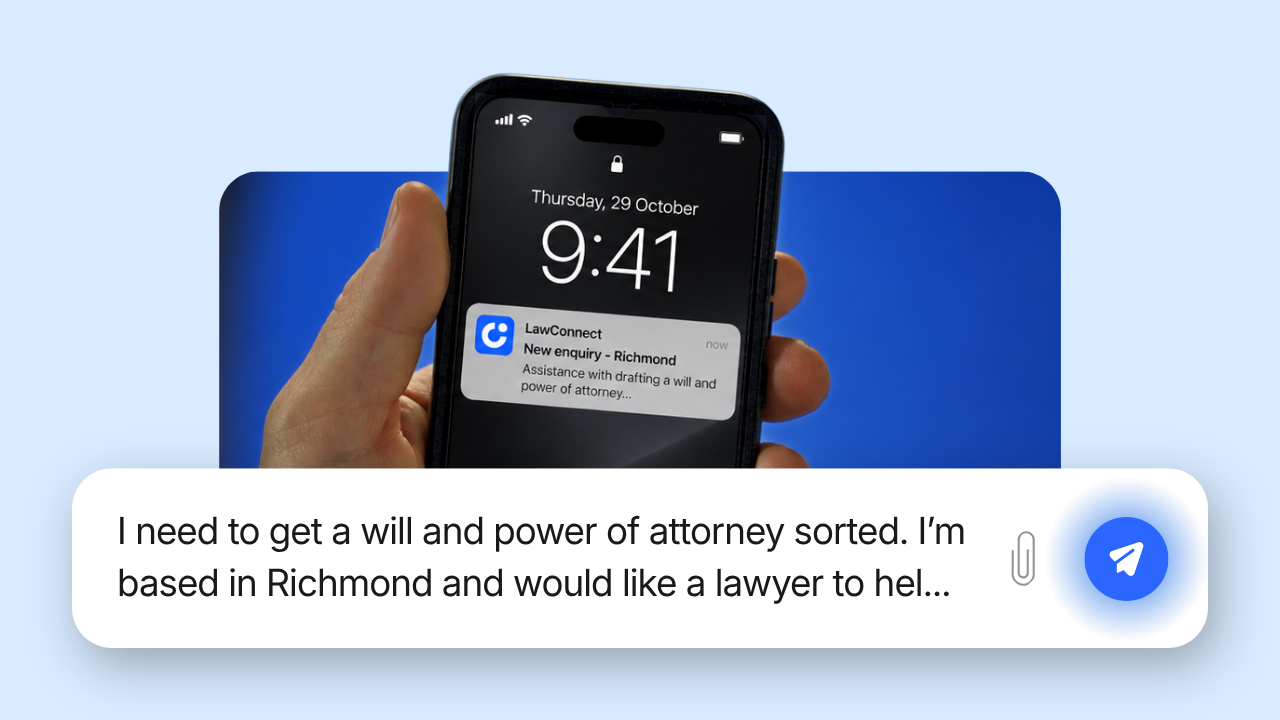
We’re already starting to see this at LawConnect. In one recent case, someone discovered LawConnect through a conversation with ChatGPT about their legal situation. They then used our plugin to upload more than 200 documents before being connected with a lawyer, who called them within five minutes. Just days later, they became a paying client.
With the client’s documents and a summary of their situation available ahead of the call, the lawyer was able to get across the matter sooner and focus the conversation on what the client needed.
Greater access to information is changing client expectations
As more people use AI to make sense of their legal problems, it’s also worth considering how that information is influencing the decisions they make before approaching a lawyer and what they expect when they eventually seek advice.
Over recent years, general protections filings have increased by 153%, alongside growing levels of self-representation. There are several factors behind these changes, and while we can’t attribute them to AI, easier access to legal information may be contributing to this broader shift.
Better access to legal information can give people the confidence to pursue a matter themselves before approaching a lawyer. For firms, that means some clients arrive later in the process, after they’ve already taken steps or made decisions that need to be assessed.
Having already done some research can help clients explain their situation and give lawyers a useful starting point for the conversation. It can also make clients feel understood when their lawyer is able to build on the information they’ve already gathered.
However, the information clients find through AI doesn’t always reflect the full legal context or how the law applies to their particular circumstances.
I’ve seen this particularly around mediation, where a solicitor gives advice to a client, who then puts that advice into a general AI tool. The information can become distorted or misinterpreted, influencing how the client approaches negotiations with the other party.
This is where legal expertise becomes even more valuable. Lawyers need to be able to challenge clients’ assumptions, explain how the law applies to their circumstances, and guide them towards the best course of action. How they handle those conversations can shape the trust clients place in their advice.
AI can give people answers, but it can’t take responsibility for them. That still sits with the lawyer.
Making AI part of the client conversation
I recently heard someone joke that lawyers need to start building their defences against clients arriving with AI-generated advice. Given the challenges this can create, the frustration is understandable. But I think the firms that embrace this shift will have the edge.
People will keep using AI to understand their legal problems, so it makes sense to bring that research into the client conversation. Ask what they've found, how they think it applies to them, and what's still keeping them up at night. That last question is often where they need a lawyer most.
That's also why we're building LawConnect alongside firms. We want to hear where time is being lost and build tools that free lawyers up to focus on the work clients value most.
If AI helps more people recognise when they need legal advice and arrive better informed, that's a good thing for the profession. In a difficult moment, there's still real value in having someone who understands your situation say, “Here's what matters in your case, and here's what I'd do next.”