

More than 30,000 Australians came to LawConnect in October. Here's what we're learning.

In October, more than 30,000 Australians came to LawConnect with a legal problem. Almost 10,000 asked to be connected with a lawyer, up from around 1,500 in October last year.
That growth is exciting, but what interests me most is why people come to us in the first place. Some already know they want a lawyer. Many are still working out what’s happened to them, and whether a lawyer can help.
Until recently, people have largely been expected to figure that out on their own before approaching a law firm. That isn’t easy when you’re facing something unfamiliar and don’t know who to turn to. The conversations we’re seeing are showing us where people get stuck, and how we can make getting legal help easier.
The journey behind every enquiry
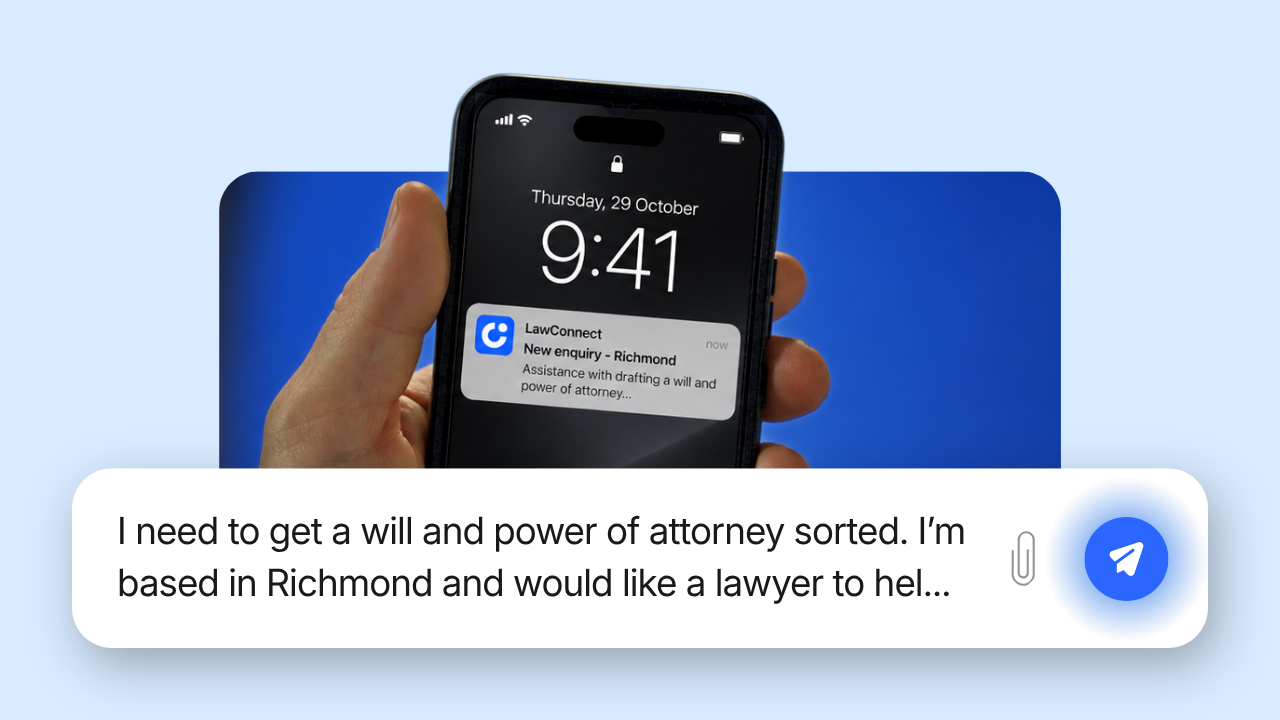
People often come to LawConnect during significant life moments, like after a separation or a sudden change in family circumstances, unsure what it means for them or what to do next.
Half of October's enquiries involved a will or estate, or a family matter. These are deeply personal situations where people may be unsure of their options or whether they need legal advice. Often, that need only becomes clear when they're faced with a decision they don't know how to make.
The gap between having a problem and getting help
When you’re facing a legal issue for the first time, it’s hard to know where to start. Is this even a legal problem? What information matters? What documents will I need? Who should I speak to?
It’s not just the people coming to LawConnect. Earlier this year, research we commissioned with YouGov found 63% of Australians were unsure where to begin with a legal issue. That stage comes well before anyone contacts a law firm, and it’s where people have had the least support.
Without guidance early on, people can end up paying for appointments just to find out where they stand. That’s a significant cost before they’ve received the advice they actually need.
People have been searching for legal answers online for years, but AI is changing the experience. Instead of guessing the right legal terms, someone can describe what’s happened in their own words and ask questions about their own circumstances.
That help also needs to be there when people need it. Over a recent 90-day period, 45% of people asked us for a lawyer outside business hours, when most firms are closed.
Take someone who’s just lost their job after ten years with the same company. It’s 9pm on a weeknight, and they’re wondering whether what happened was fair. AI can help them understand what unfair dismissal involves and what their options might be. Whether they actually have grounds to challenge it is a different question. That needs a lawyer to assess their circumstances and give advice they can rely on.
Making the path to legal help easier
Up until now, legal technology has mainly focused on making law firms more productive and efficient. There’s a chance to extend that focus to consumers too, helping people navigate their legal problems and reach the expertise they need.
When we started LawConnect (or Finchly, for those who’ve been following along), our focus was on helping people find the right lawyer. As more people used the platform, we realised many weren’t ready to make that choice yet. They were still trying to work out their problem, and whether it was a legal issue at all. That shaped our approach to legal navigation.
To us, legal navigation means helping someone:
Explain what happened in their own words.
Understand where they stand.
Gather their documents and spot what’s missing.
Connect with the right lawyer.
We’ve also brought this into ChatGPT, so people can start where many of them are already asking questions.
That’s where someone recently found us, after spending six months trying to work out what to do about a legal situation. Our plugin helped them gather more than 200 documents, prepare a summary, and connect with a lawyer. Those documents could then be shared with the firm through LawY, a legal AI tool for lawyers. Within five minutes, they were speaking to that lawyer, and two days later they’d become a client.
Handing over that many documents can feel daunting when people worry about how much it will cost for a lawyer to read through them. With AI on the lawyer’s side too, the firm can work through the paperwork faster, potentially reducing the cost for the client. That’s where I see the real value of bringing AI into both sides of the journey.
Having spent much of my career building marketplaces, I’ve learned they work best when people know what they’re looking for. In legal, they often don’t. That’s what we’re working to make a lot easier.
Helping more people find the expertise they need
Law firms invest considerable time and money in attracting clients, yet many of the people who need their expertise aren't sure whether they need a lawyer at all, let alone how to find and choose the right firm. Better legal navigation helps firms reach people who might otherwise never find them.
Having more context before speaking to a lawyer can also make that first conversation more productive. Think of it like arriving at a specialist appointment with your scans and test results already organised. You still need the specialist’s expertise, but you’re in a much better position to make the most of the conversation.
The same applies to a first meeting with a lawyer, who still needs to establish the facts and make their own assessment, but can spend less time piecing together the basics and more time discussing what to do next.
How firms respond is just as important. When someone is dealing with something urgent or stressful, they want to know someone is there to help. Quick responses can make a real difference. Firms that make those first conversations easy will be better placed to turn enquiries into client relationships.
I believe lawyers will always have an essential role in assessing people’s situations and taking responsibility for their advice. What we’re building at LawConnect is a way for more people to reach that expertise sooner and better prepared, particularly those who might otherwise struggle to get started.
That has real potential to make legal help more cost-effective and to give people some clarity at a stressful time. For me, that’s what improving access to justice looks like in practice.